 info@agrodale.com
 +91 7025675636
 info@agrodale.com
+91 7025675636
info@agrodale.com
+91 7025675636
Welcome to AGRO DALE, your trusted partner in the world of poultry and agriculture. We are a dynamic and innovative company dedicated to providing top-tier services in the agricultural sector. With years of experience and a passionate team, we have become a leading name in the industry. We adhere to the highest standards of quality and safety in all our operations, from hatching to feed production and farming.
If you’ve spent any time looking at style pages or shopping at upscale department stores in 2026, you’ve undoubtedly seen Palm Angels pants. The Italian designer label, created by creative and creative director Francesco Ragazzi, has established a one-of-a-kind space where sport-inspired silhouettes meet runway-level quality. Palm Angels pants — spanning track pants, cargo styles, denim, and dressy trousers — have become go-to pieces for style-savvy shoppers who don’t want to choose between ease and good looks. With the worldwide streetwear industry worth roughly $187 billion in 2025 and expected to grow another 8% through 2026 according to Grand View Research, the need for finely constructed standout pants has never been higher. This in-depth article explores everything from fit profiles and fabric details to outfit ideas that deliver in the real life.
Palm Angels avoids a one-size-fits-all strategy to pants, and knowing the different styles in their lineup is vital before making a purchase. The track pants are still the house’s calling card — at first glance recognizable thanks to the signature side stripes that extend from waist to ankle, crafted in sleek polyester or jersey blends that fall elegantly. Cargo pants have become progressively visible since the FW24 collection, boasting roomy flap pockets, drawstring hems, and loose cuts that evoke army utility through a high-end lens. The brand’s denim lineup includes straight-leg and slim-fit jeans with paint-splatter touches, distressed finishes, and the trademark curved palm logo. Refined trousers show up in certain seasonal drops with pressed fronts and streamlined legs. Each style occupies a different need in your wardrobe, and the most strategic strategy is to own at least two types to optimize adaptability across seasons.
One of the most typical concerns when looking at Palm Angels pants from e-commerce sites is sizing accuracy, and the truth is that fit changes considerably across styles. The track pants typically run standard in sizing with a somewhat visit palmangelstee.com relaxed leg — not baggy, but not narrow either, sitting in that pleasant middle ground that works for most frames. The elastic waistband with hidden drawstring delivers a tailored fit, and going with your standard size generally is ideal as the fabric has natural give. Cargo pants often run one size larger due to their purposely generous construction, so ordering smaller is smart unless you are going for the exaggerated volume. Denim runs closer to traditional sizing but with a a bit roomier thigh compared to brands like Saint Laurent or Amiri, mirroring Palm Angels’ skate-rooted tendency for range of motion. Inseam lengths commonly range from 30 to 32 inches, with track pants often offering a mildly shorter ankle-skimming cut that functions perfectly with both sneakers and boots.
Physique holds a significant role in how Palm Angels pants look and function, and there are easy-to-follow rules that assist hone your selections. If you have a slender, taller frame, the track pants in standard sizing form a balanced silhouette that highlights length without seeming shapeless. Stockier builds do well with the cargo styles, where the broader cut works with bigger thighs and the structured pockets bring visual interest that evens out body ratios. Athletic builds with powerful legs should handle the denim range with careful thought — the straight-leg options deliver more room than the slim cuts, which can get limiting around the quads. For shorter guys, the ankle-length track pants prevent the bunching that full-length pants often produce, preserving a clean line from knee to shoe. Irrespective of body type, the most important tip is to pay attention to how the pants sit when you’re in a natural stance — ease in movement translates directly to swagger in how you look.
What sets apart Palm Angels pants from mass-market alternatives revolves around textiles and workmanship. The track pants use a robust performance jersey or tricot fabric — typically a polyester-elastane blend weighing around 280–320 GSM — that holds its shape wash after wash without pilling or losing shape. Stitching is consistently sharp, with double-stitched seams at tension spots like the crotch gusset and pocket openings. Cargo pants feature ripstop nylon or heavy-duty cotton canvas with a pre-washed finish. Denim pieces use Japanese or Turkish selvedge denim in the 12–14 oz range, offering toughness without rigidity. Hardware details — zippers, snaps, drawstring aglets — are branded and made from premium metals. All construction happens in Italian factories, delivering genuine value given Italy’s legendary standing for textile mastery. At price points ranging from $350 for entry-level track pants to $700+ for specialty denim, you’re getting lasting quality over several seasons.
Track pants are the starting piece for most Palm Angels buyers, and their styling options extend well past workout-inspired looks. The timeless black track pant with white side stripe pairs seamlessly with a plain white tee and low-top sneakers for an understated outfit. For a more dressed-up look, try them with a tucked mock-neck sweater in camel or charcoal, crisp white leather sneakers, and a tailored overcoat. Shoe selections dramatically transform the tone: chunky trail sneakers drive the look toward rugged streetwear, while minimalist leather shoes or Chelsea boots move it closer to polished casual territory. Color cohesion counts: if your track pants have colored stripes, repeat that color somewhere else in your outfit to achieve visual balance. In 2026, the single-color track suit approach has surged back into style, so pairing the pants with their companion Palm Angels track jacket forms a put-together set that comes across as naturally matched.
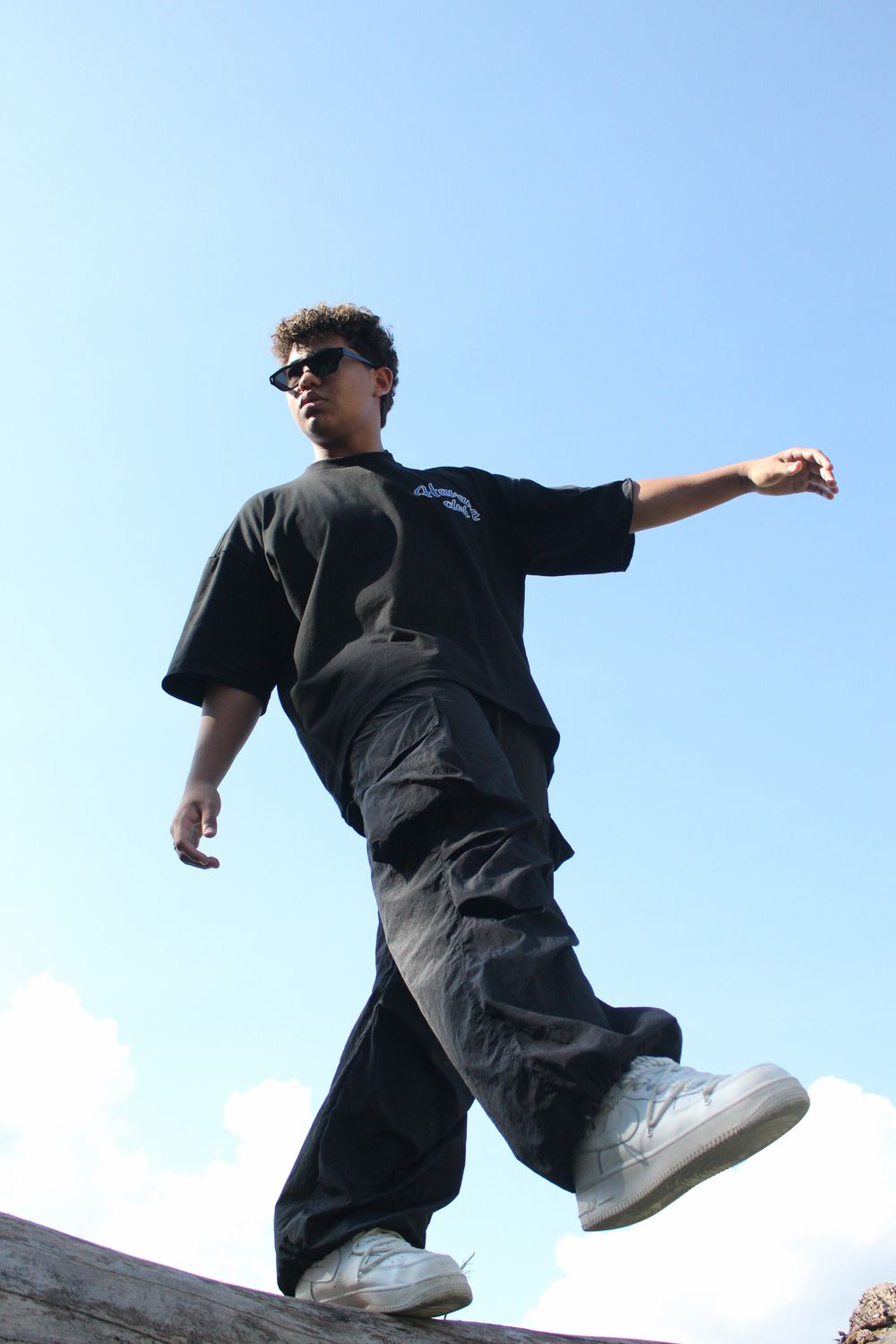
Palm Angels cargo pants demand a different styling strategy, doubling down on a raw, workwear aesthetic that’s led fashion feeds in 2026. The generous silhouette is most effective when contrasted with a fitted or semi-fitted top — a textured tank top under an open flannel shirt ensures the outfit from seeming formless. Footwear should be chunky: imagine combat boots, hiking-inspired sneakers, or chunky platform shoes. Earth tones and military-inspired palettes — olive, tan, rust, black — read as most appropriate with cargo styles. Accessories can lean utilitarian: a tactical belt with a metal buckle or a tactical-style sling bag lends genuine character. These pants also look great with rolling at the ankle, which changes proportions and shows off your footwear. The cargo direction has serious momentum, with premier houses from Prada to Louis Vuitton incorporating cargo details into their 2026 ranges.
For days when track pants or cargos feel too casual, Palm Angels denim and tailored trousers bridge the distance between streetwear and standard menswear. The paint-splattered jeans combine effortlessly with a plain black tee, a leather jacket, and boots for rebellious style. Straight-leg jeans without major distressing present a more adaptable canvas: they perform under blazers, with hoodies, or with knit polos for a vintage-inspired summer look. The refined trousers earn attention if you go to events where track pants would seem out of place — match them with loafers and a properly sized Oxford-cloth shirt. The house’s denim retails between $450 and $700, putting it alongside brands like Amiri and Purple Brand in the high-end streetwear denim category.
Working through the shopping landscape means grasping pricing cycles and official outlets. Below is a current summary of common pricing in 2026.
| Pant Style | Retail Price (USD) | Sale Price Range | Best Retailers |
|---|---|---|---|
| Classic Track Pants | $350 – $450 | $210 – $315 | SSENSE, Nordstrom, END. |
| Cargo Pants | $420 – $550 | $250 – $385 | Farfetch, LN-CC, Selfridges |
| Denim Jeans | $450 – $700 | $270 – $490 | Mr Porter, Saks, Neiman Marcus |
| Tailored Trousers | $400 – $600 | $240 – $420 | Palm Angels Official |
End-of-season sales, commonly running in January and July, deliver the biggest discounts — up to 50% off at partner retailers. The pre-owned market also creates opportunities, with gently worn Palm Angels track pants frequently listed on Grailed at 40–60% below retail. Legitimacy verification is critical when buying secondhand: check for proper labeling, consistent stitching, and the quality of hardware before purchasing. Whether you buy at full retail during a fresh drop or search for deals on the secondary market, Palm Angels pants represent a solid asset to any wardrobe that appreciates the meeting point of ease, construction, and contemporary design.